Introduction
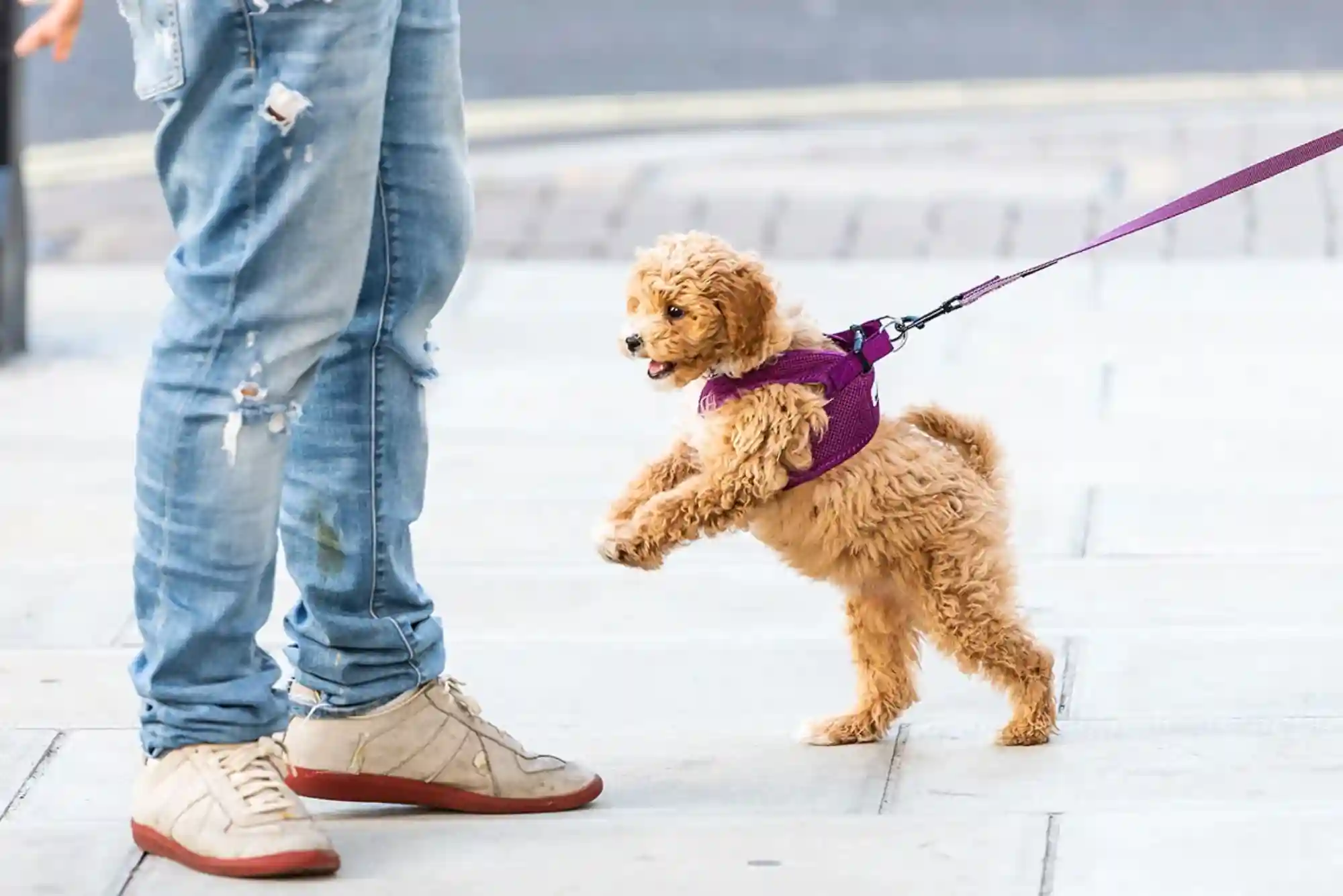
Learning how to stop a puppy from biting ankles and pant legs during walks can make daily outings much more enjoyable. This behavior is common among young dogs, especially during their early training stages. However, it can quickly become frustrating when your puppy repeatedly grabs your trousers or nips your ankles.
Puppies explore their surroundings using their mouths. They may also bite moving feet because movement triggers their natural chasing instincts. Teething, excitement, tiredness, and overstimulation can make the behavior worse.
Fortunately, you can teach your puppy to walk calmly without biting. The key is understanding the reason behind the behavior and responding consistently. With patience, positive reinforcement, and suitable training techniques, your puppy can develop better walking habits.
Why Do Puppies Bite Ankles and Pant Legs During Walks?
Understanding the cause is the first step toward solving the problem. Puppies rarely bite clothing simply to misbehave. Their actions usually reflect excitement, curiosity, frustration, or an unmet need.
Natural Herding and Chasing Instincts
Some puppies instinctively chase moving objects. When your legs move, your puppy may interpret them as something exciting to pursue. Herding breeds, including Border Collies and Australian Shepherds, can be particularly sensitive to movement.
Your puppy might chase your feet, grab your trousers, or nip at your heels. This behavior does not automatically indicate aggression. Instead, it often reflects an instinct that requires appropriate guidance.

Teething and Mouth Exploration
Puppies experience teething discomfort as their adult teeth develop. Chewing can temporarily relieve this discomfort. Unfortunately, pant legs and shoelaces may become convenient targets during walks.
Providing suitable chew toys helps satisfy this natural need. However, your puppy must also learn which objects are appropriate to bite.
Excitement and Overstimulation
Walks introduce puppies to unfamiliar smells, sounds, people, and animals. These experiences can become overwhelming, especially for young dogs with limited impulse control.
An overstimulated puppy may suddenly jump, bite clothing, or chase moving feet. Sometimes, the behavior appears near the end of a walk because the puppy is tired rather than under-exercised.
How to Stop a Puppy from Biting Ankles and Pant Legs During Walks
The most effective approach combines calm responses, redirection, and rewards for desirable behavior. Avoid turning the incident into an exciting game.
Stop Moving When Your Puppy Starts Biting
When your puppy grabs your pant leg, stop walking immediately. Keep your body relaxed and avoid pulling the fabric away sharply. Pulling can make the clothing more exciting and encourage your puppy to tug harder.
Wait briefly for your puppy to release the fabric. Once the puppy lets go, calmly redirect attention toward a suitable toy or reward calm behavior.
If biting continues, create a little distance using a safe, controlled movement. Avoid dragging your puppy or allowing the leash to become tight around the neck.
Redirect Biting Toward an Appropriate Toy
Carry a small, puppy-safe toy during walks. When your puppy begins targeting your ankles, offer the toy before the behavior escalates whenever possible.
Reward your puppy for biting and carrying the toy instead of grabbing clothing. This teaches an alternative behavior rather than simply telling your puppy to stop.
Choose toys that are easy to carry and suitable for your puppy’s size. Avoid toys with small parts that could become choking hazards.
Reward Calm Walking
Positive reinforcement helps puppies understand exactly which behaviors earn rewards. Carry small treats during training sessions and reward your puppy for walking beside you without grabbing clothing.
Initially, reward frequently. As your puppy improves, gradually increase the distance between rewards.
You can also reward your puppy for checking in with you, responding to their name, or walking with a loose leash. These simple habits build attention and improve overall leash manners.
Teach a Reliable Attention Cue
Teaching a cue such as “look” or your puppy’s name can help redirect attention before biting begins.
Practice indoors first, where distractions are limited. Say your puppy’s name once and reward them when they look toward you.
Next, practice in your garden or another quiet outdoor space. During walks, use the cue when your puppy starts focusing on your moving feet.
Reward immediately when your puppy turns toward you. Avoid repeatedly shouting commands because this can increase excitement or cause confusion.
What Should You Do When Your Puppy Bites Your Pants Repeatedly?
Repeated biting can feel exhausting, particularly when your puppy refuses to release your clothing. However, chasing, shouting, or physically punishing your puppy may increase excitement or fear.
Instead, pause the walk and assess what your puppy needs. If your puppy is overstimulated, move to a quieter area and allow time to settle.
If your puppy continues biting, calmly interrupt the interaction and offer a suitable toy. Reward the first moments of relaxed behavior.
When the puppy cannot settle, end the training session safely and return home if appropriate. A shorter, successful walk is more useful than a long, frustrating session.
Consistency matters because puppies learn through repeated experiences. If biting sometimes produces a tugging game, the behavior may continue. Ensure everyone walking the puppy follows the same approach.
How to Prevent Ankle Biting Before It Starts
Prevention can make training considerably easier. Observe your puppy’s behavior and identify the situations that trigger biting.
Some puppies become mouthy when they are hungry, tired, overstimulated, or desperate to play. Others react strongly when their owners walk quickly or change direction.
Schedule walks according to your puppy’s age, health, and energy level. Provide enough opportunities for rest, sniffing, and appropriate play throughout the day.
Before leaving home, allow your puppy a brief opportunity to settle. Begin walking slowly and reward attention from the beginning.
You can also practice indoors by taking a few steps and rewarding your puppy for staying beside you. Gradually introduce more movement and distractions as your puppy improves.
Avoid encouraging your puppy to chase your feet during play. Although the behavior might seem harmless initially, it can become confusing when you later expect your puppy to ignore moving ankles.
Common Mistakes That Make Puppy Biting Worse
One common mistake is pulling your leg away quickly. Fast movement may trigger chasing and encourage your puppy to bite harder.
Another mistake is shouting or pushing the puppy away. These reactions can frighten some puppies while exciting others. Calm, consistent responses are generally more effective.
Allowing occasional clothing biting can also slow progress. Puppies need clear boundaries, so everyone should respond consistently.
Finally, avoid assuming that every biting episode means your puppy needs more exercise. Excessive activity can increase fatigue and overstimulation. Balanced play, mental enrichment, and adequate sleep are equally important.
When Should You Seek Professional Help?
Most puppy ankle biting improves with consistent training and maturity. However, professional guidance may be necessary when biting becomes intense, frequent, or difficult to interrupt.
Seek help if your puppy repeatedly breaks the skin, stiffens their body, guards objects, or shows signs of fear during handling. Sudden changes in behavior may also indicate discomfort or another underlying problem.
A veterinarian can assess possible medical causes. A qualified, reward-based dog trainer or veterinary behavior professional can develop an individualized training plan.
Avoid trainers who rely on intimidation, painful corrections, or methods that increase fear. Humane training supports learning while protecting your puppy’s trust and confidence.
Frequently Asked Questions
Why does my puppy bite my ankles when I walk?
Puppies may bite ankles because moving feet trigger chasing instincts. Teething discomfort, excitement, frustration, and overtiredness can also contribute. Identifying the trigger helps you choose the most effective training approach.
How do I stop my puppy from biting my pants while walking?
Stop moving when biting begins, avoid tugging the fabric, and redirect your puppy toward an appropriate toy. Reward calm walking and practice short training sessions consistently.
Should I ignore my puppy when it bites my feet?
Briefly removing attention can help when biting is attention-seeking. However, ignoring your puppy alone may not work when the behavior comes from chasing instincts, teething, or overstimulation. Combine calm pauses with redirection and positive reinforcement.
Do puppies grow out of ankle biting?
Many puppies become less mouthy as they mature, especially when owners teach appropriate alternatives. However, the behavior may continue if it repeatedly receives attention or becomes an enjoyable game. Consistent training helps establish better habits.
Why does my puppy bite my ankles when tired?
Tired puppies often struggle to regulate excitement and control their impulses. Their biting may increase when they need rest rather than additional activity. Offer a quiet break and ensure your puppy gets adequate sleep.
Conclusion
Learning how to stop a puppy from biting ankles and pant legs during walks requires patience, consistency, and an understanding of puppy behavior. Most importantly, teach your puppy what to do instead of relying on punishment.